What Is the Aurora Borealis?
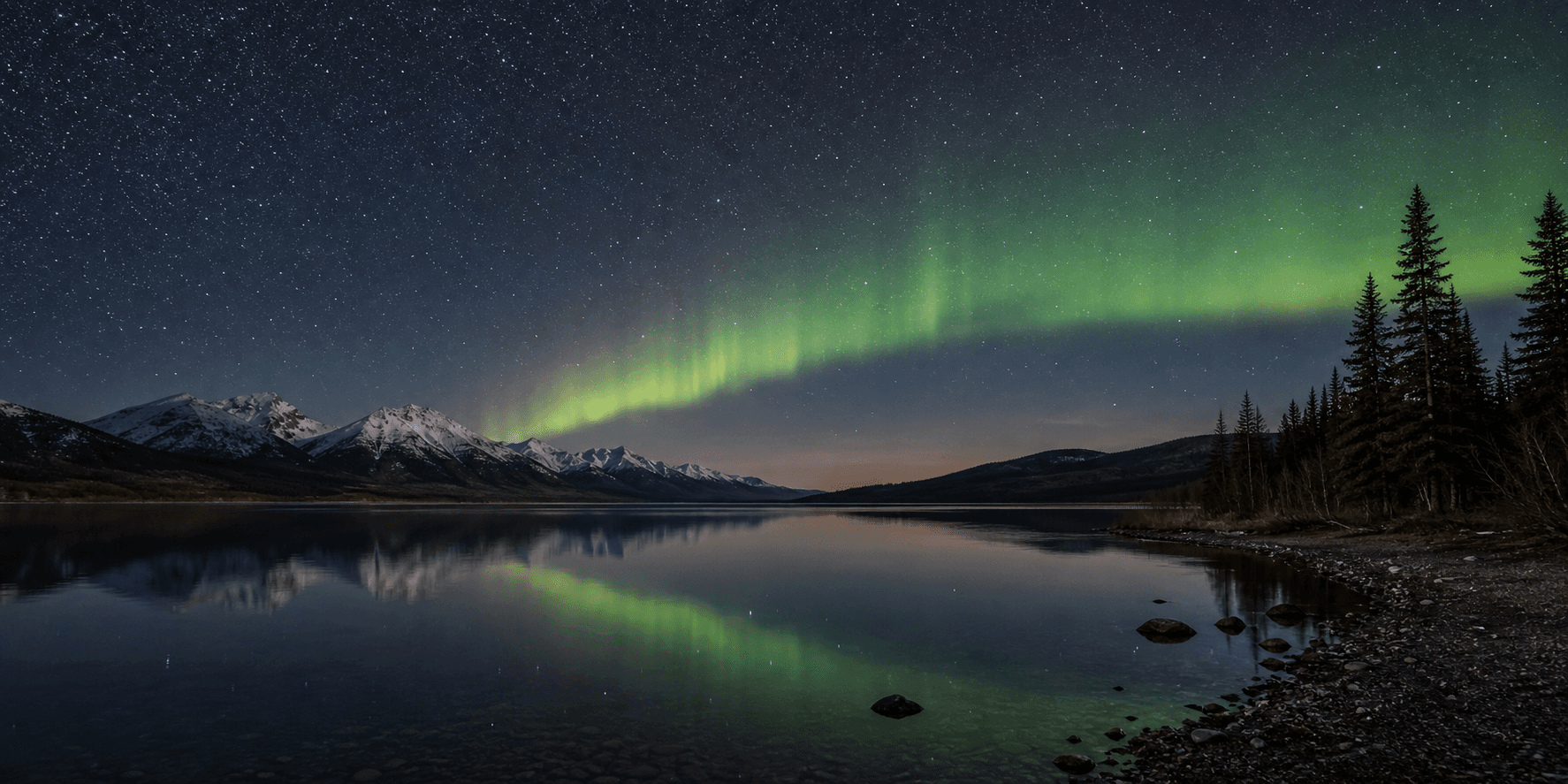
The Aurora Borealis is the natural light display most people call the northern lights.
The short answer is that it happens when charged particles from the Sun interact with Earth's magnetic field and atmosphere. That interaction releases energy in the form of light, which is why the sky can suddenly glow green, red, purple, or pink.
If that sounds a little technical, the practical version is simpler: the Sun sends energy our way, Earth channels part of it toward the polar regions, and the upper atmosphere lights up.
The short answer
The Aurora Borealis is:
- A natural light display in the night sky
- Most often seen in northern high-latitude regions
- Caused by solar particles interacting with Earth's magnetic field
- Usually green, but sometimes red, purple, blue, or pink
It is not a cloud, not reflected city light, and not something that happens only in winter. Winter is just when long, dark nights make it easier to see.
What causes the northern lights?
The process starts at the Sun.
The Sun constantly releases a flow of charged particles called the solar wind. Sometimes it also sends out stronger bursts of solar material, such as coronal mass ejections. When that solar energy reaches Earth, Earth's magnetic field interacts with it and helps funnel some of it toward the polar regions.
As those particles collide with gases high in the atmosphere, the gases become excited and release light.
That is the aurora.
If you want the bigger long-term pattern behind strong and quiet aurora years, the solar cycle and aurora explains why some periods are busier than others.
Why does it happen near the poles?
Earth's magnetic field is a big part of the answer.
Instead of letting incoming charged particles spread evenly across the globe, the magnetic field guides more of them toward the polar regions. That is why places in Alaska, northern Canada, Iceland, Norway, and similar high-latitude areas see the aurora much more often than places farther south.
This also explains why people in the northern U.S. might see the aurora during stronger storms, while people in California or Texas usually need unusually intense geomagnetic activity.
Why is it called the Aurora Borealis?
"Aurora" comes from the Roman goddess of dawn, and "borealis" means northern.
So Aurora Borealis basically means "northern dawn," even though it appears at night.
The southern version is called the Aurora Australis, or southern lights.
What colors can the aurora be?
Green is the most common aurora color, but it is not the only one.
Different colors depend mainly on:
- Which gases are involved
- How high in the atmosphere the collisions happen
- How much energy is being released
In general:
- Green is commonly linked to oxygen
- Red can also come from oxygen, often higher in the atmosphere
- Blue and purple are more associated with nitrogen
- Pink can show up when multiple colors and layers blend together
If you want the full breakdown, northern lights colors explained goes deeper into that part without turning it into a chemistry exam.
What shapes can the aurora take?
The northern lights do not always look like giant bright curtains covering the whole sky.
They can appear as:
- Faint arcs near the horizon
- Bands or ribbons
- Curtains with folds and motion
- Diffuse glows
- Fast-moving rays during stronger activity
Sometimes the aurora is dramatic and obvious. Sometimes it is subtle enough that people wonder whether they are seeing a cloud, haze, or just wishful thinking.
That uncertainty is part of why aurora is hard to predict.
Where can you see the Aurora Borealis?
The best regular viewing is in high-latitude regions, especially under dark, clear skies.
That usually means places such as:
- Alaska
- Northern Canada
- Parts of the Yukon, Northwest Territories, and Nunavut
- Northern Scandinavia
- Iceland
In the U.S. and southern Canada, the aurora can still be seen during stronger geomagnetic storms, especially in darker northern areas.
If you are trying to plan a trip rather than just understand the science, best places for aurora tourism in North America is the more practical guide.
Do the northern lights happen every night?
Not in a way that guarantees you will see them.
Auroral activity varies with space weather, and visibility also depends on:
- How active the Sun is
- Whether the aurora reaches your latitude
- Whether the sky is dark enough
- Whether clouds get in the way
- How much light pollution you have nearby
So the aurora may be active somewhere, but not visible from where you are.
That is why it helps to pair the science with a forecast. The U.S. forecast and Canada forecast are the practical next stop when you want to know whether tonight is worth checking.
Why do people see it more in winter?
The aurora does not only happen in winter.
Winter is just better for viewing because nights are longer and darker. In summer, especially in far northern places, twilight can last so long that even a real aurora gets washed out.
Why it is hard to see the northern lights in summer covers that in more detail.
The takeaway
The Aurora Borealis is a natural light display caused by charged particles from the Sun interacting with Earth's magnetic field and upper atmosphere.
It is most often seen in high-latitude northern regions, and it can appear in different colors and shapes depending on atmospheric conditions and aurora strength. The science behind it is real, but from the ground it still feels a little magical, which is probably why people never get tired of looking up when it happens.