Best Places for Aurora Tourism in North America
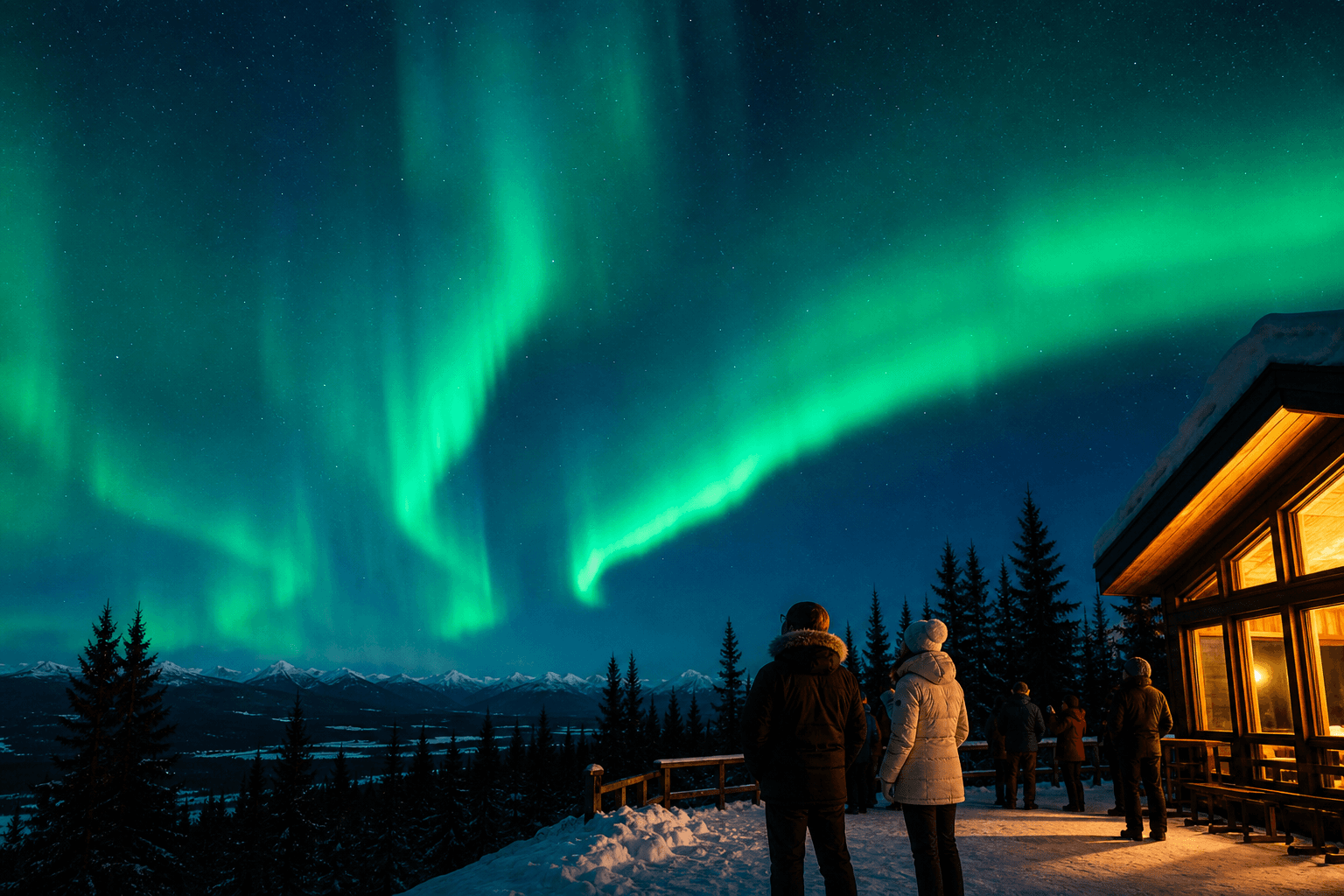
If you want to plan a northern lights trip, the honest answer is not "go anywhere north and hope for the best." Aurora tourism works better when you pick a place that matches your budget, your cold tolerance, and your appetite for remote logistics.
Some destinations are popular because they sit under the auroral oval. Others are popular because they are easier to reach, easier to combine with a broader vacation, or easier to enjoy if the sky decides to be difficult.
The short answer
Some of the most popular aurora tourism spots in North America are:
- Fairbanks, Alaska
- Yellowknife, Northwest Territories
- Whitehorse, Yukon
- Churchill, Manitoba
- Jasper, Alberta
If your main goal is maximizing aurora odds, Fairbanks, Yellowknife, Whitehorse, and Churchill usually belong near the top of the list. If you want a more flexible mountain trip with excellent dark skies but less consistent aurora reach, Jasper is a strong option.
The best destination for you depends on three practical questions:
- How far north are you willing to go?
- How remote are you willing to go?
- Do you want the trip to be mostly about auroras, or about a bigger vacation that happens to include them?
What makes a place good for aurora tourism?
A good aurora destination is not just "north."
The strongest spots usually combine:
- Frequent dark nights during the main viewing season
- A location near or under the auroral oval
- Enough tourism infrastructure that you are not improvising your whole trip in a parking lot
- Reasonable access to darker skies away from town lights
That last point matters more than many first-time travelers expect. A destination can have excellent aurora potential and still be annoying if it is hard to reach, hard to move around in, or packed with bright light where visitors actually stay.
Fairbanks, Alaska
Fairbanks is one of the most established aurora destinations in the United States, and for many U.S.-based travelers it is the most straightforward high-odds choice.
Why it is popular:
- It sits under the auroral oval
- It has a mature aurora tourism scene with tours, lodges, warming huts, and self-drive options
- It is easier for many U.S. travelers to reach than more remote northern Canadian destinations
Fairbanks is especially appealing if you want a trip built around aurora watching without needing the trip to become a full logistics project. That alone is a genuine selling point. "Beautiful but complicated" is not always the vacation mood.
The tradeoff is that you still need dark, clear skies and patience. A famous aurora destination does not override weather, and it definitely does not negotiate with clouds.
Yellowknife, Northwest Territories
Yellowknife is often mentioned as one of the premier aurora tourism hubs in Canada, and for good reason.
Why it is popular:
- It has long, dark winter nights
- It is close to excellent viewing areas outside city lights
- It has a strong aurora-focused visitor economy, including dedicated viewing operators and lodges
One of Yellowknife's big practical advantages is that it works well for travelers who want strong aurora odds without going fully off-grid. You can stay in town, join tours, or head out toward darker viewing corridors like the Ingraham Trail area.
Compared with some remote bucket-list destinations, Yellowknife often feels like a better balance between reliability and convenience. That is a useful middle ground if you want more aurora and less transport drama.
Whitehorse, Yukon
Whitehorse is a popular aurora base for travelers who want northern lights plus a broader Yukon trip.
Why it is popular:
- It is the Yukon travel hub
- The official viewing season runs from roughly mid-August to mid-April
- You can get outside city lights fairly quickly
Whitehorse is a good fit if you want a trip that includes hot springs, winter activities, scenic drives, or a few different day excursions instead of only night-by-night aurora chasing. It offers easier access and more trip variety than some more isolated destinations.
It is also a sensible choice for people who want aurora tourism with a slightly softer edge. You still need to dress for the cold and respect the conditions, but Whitehorse can be more approachable than places that feel much farther out.
Churchill, Manitoba
Churchill is one of the most iconic aurora tourism destinations in Canada, and it earns that reputation. It sits under the auroral oval and is widely promoted for very frequent aurora visibility during the dark season.
Why it is popular:
- It is a high-latitude destination with strong aurora odds
- It is well known for specialized aurora viewing infrastructure
- It has a genuinely distinctive subarctic travel identity
Churchill is also different from the others on this list in one important way: it is remote. You do not drive there from Winnipeg. Travel Manitoba notes that there are no roads to Churchill, so visitors arrive by plane or train.
That remoteness is part of the appeal, but it should shape your expectations and your budget. Churchill can be fantastic for travelers who want a dedicated northern experience and are comfortable paying for a more specialized trip. It is less ideal if you want maximum flexibility or a quick weekend escape.
Jasper, Alberta
Jasper is not usually the highest-probability aurora destination on this list, but it is still one of the most popular places to include in northern lights travel conversations because it is exceptionally easy to pair with a broader vacation.
Why it is popular:
- Jasper National Park is a major dark-sky destination
- It is far easier to combine with a Rockies trip than places like Churchill or Yellowknife
- It works well for travelers who care about stars, landscapes, and night-sky travel in general
This is where expectations matter. Jasper is an excellent dark-sky destination, but it sits much farther south than Fairbanks, Yellowknife, Whitehorse, or Churchill. That means you typically need stronger geomagnetic activity for the aurora to put on a comparable show.
If your main priority is raw aurora reliability, Jasper would not be my first pick. If your priority is "I want a great trip either way, and aurora would be an amazing bonus," Jasper becomes much more compelling.
Which destination is best for different kinds of travelers?
There is no single best spot for everyone.
Here is the practical version:
- Pick Fairbanks if you want one of the strongest U.S. options with well-developed aurora tourism.
- Pick Yellowknife if you want excellent Canadian aurora odds with relatively good infrastructure.
- Pick Whitehorse if you want aurora plus a more varied Yukon travel experience.
- Pick Churchill if you want a classic remote aurora trip and are comfortable with more specialized logistics.
- Pick Jasper if you want a dark-sky Rockies trip where aurora is part of the appeal, not the whole plan.
A few expectations that will save you money
Aurora tourism is still weather-dependent travel.
Before spending real money, keep these points in mind:
- Book enough nights to give yourself more than one chance.
- Prioritize dark-season timing over marketing photos.
- Check cloud cover as seriously as aurora forecasts.
- Think about moonlight and light pollution, not just KP numbers.
- Be cautious with trips that sound guaranteed in everything but legal wording.
If you are building your own trip rather than booking a package, keep an eye on the U.S. forecast or Canada forecast closer to departure. A forecast cannot guarantee a sighting, but it can help you make smarter choices once the trip is underway.
If you want a refresher on the science behind the lights themselves, start with what the aurora borealis is.
The bottom line
Some of the most popular aurora tourism destinations in North America are popular for good reasons, but they are not interchangeable.
Fairbanks, Yellowknife, Whitehorse, and Churchill are stronger picks when aurora reliability is the main goal. Jasper is a great dark-sky destination when you want the trip to stay rewarding even if geomagnetic activity decides to be uncooperative.
The best aurora trip is usually not the one with the most dramatic brochure photo. It is the one whose latitude, access, season, and expectations actually line up.