Why Is the Aurora So Hard to Predict?
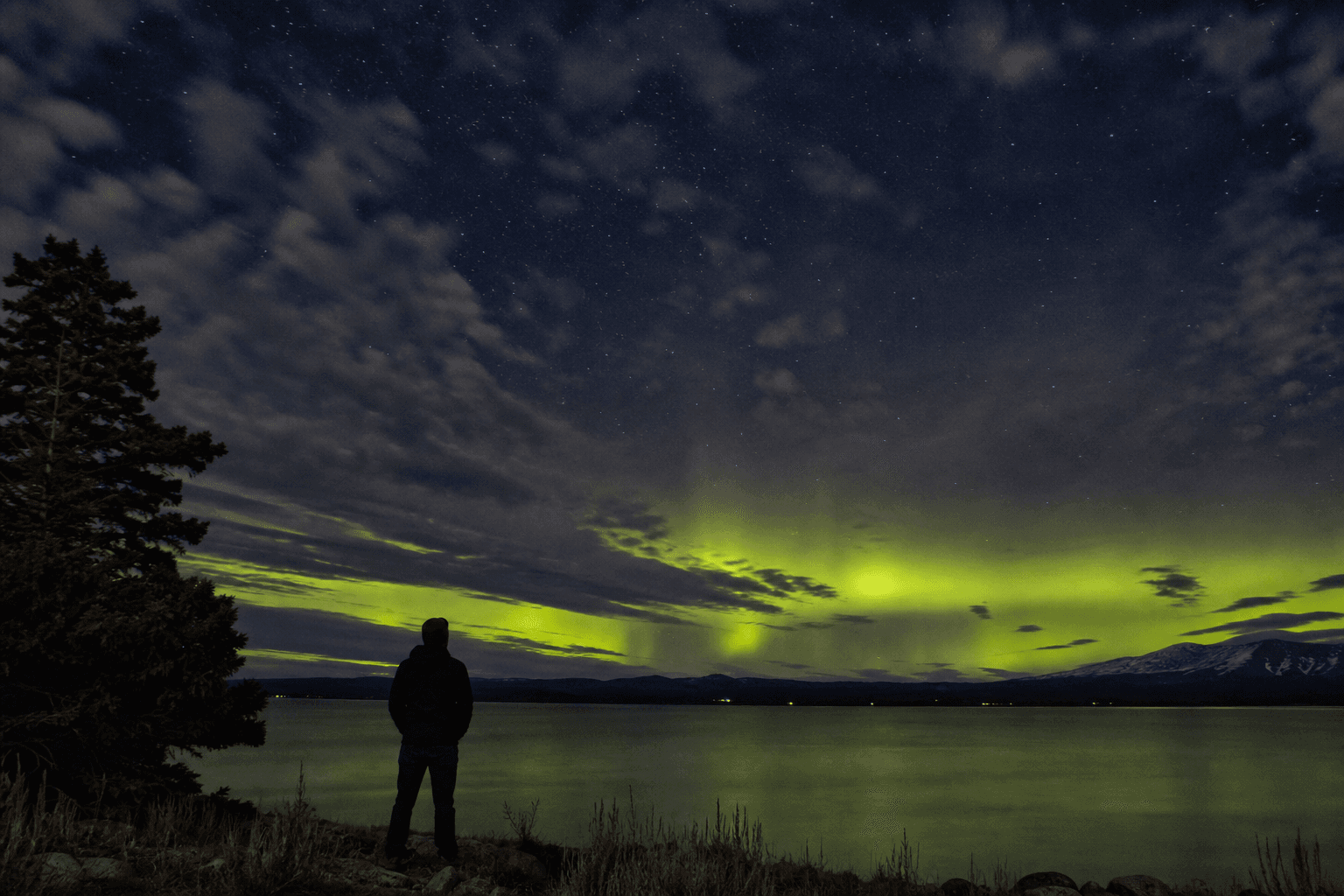
Aurora forecasts are helpful, but they are not crystal balls. The short version is that the northern lights depend on space weather, and space weather is messy.
Scientists can often tell when conditions are becoming more favorable, but they cannot promise exactly when the aurora will brighten, how far south it will reach, or whether it will be visible from your specific spot. That is why two people can check the same forecast and still have very different nights.
The short answer
The aurora is hard to predict because several moving pieces have to line up at the same time:
- The Sun has to send the right kind of charged particles toward Earth
- Earth's magnetic field has to respond in a favorable way
- The timing has to work for your location
- Your sky has to be dark and clear enough to actually see it
That means an aurora forecast is really a probability forecast. It can improve your odds, but it cannot guarantee a show. Space weather is a bit like weather on Earth in that way, except the storm starts 93 million miles away, which is not ideal for neat scheduling.
Forecasts start with the Sun, and the Sun is not tidy
The northern lights begin with activity on the Sun. That can include bursts of solar wind, coronal holes, and coronal mass ejections, often shortened to CMEs.
A CME is a large cloud of charged solar material thrown into space. If it is aimed roughly toward Earth, it can trigger stronger geomagnetic activity and make auroras visible farther south. The problem is that these eruptions do not travel in a perfectly simple way.
Forecasters can often estimate:
- Whether a solar event happened
- Whether Earth might be in its path
- Roughly when it could arrive
But "roughly" matters here. A CME might arrive earlier or later than expected, and its structure can change on the way. That means a promising forecast for tonight can turn into a better forecast for tomorrow, or a much weaker event than hoped.
The magnetic-field direction matters a lot
This is one of the biggest reasons aurora forecasting stays difficult.
It is not enough for solar particles to reach Earth. The magnetic field carried with that solar wind also matters, especially whether it points southward when it reaches our planet. Forecasters often refer to this as the Bz direction.
If Bz turns south for a sustained period, solar energy can couple more efficiently into Earth's magnetosphere. That is when geomagnetic activity often ramps up and auroras can expand farther from the poles.
If Bz stays north, the same incoming solar wind may produce a much weaker result.
This is frustrating because scientists usually cannot know the exact Bz structure of incoming solar wind very well until it gets close to Earth. In practice, that means one of the most important parts of the forecast often becomes clear only 15 to 60 minutes before the best response.
So yes, the aurora can keep a secret until the last minute.
A strong space-weather signal does not always mean a strong visible aurora
People often assume that if a forecast number is high, the sky will obviously glow. Sometimes it does. Sometimes it does not.
That is because geomagnetic activity and visible aurora are related, but they are not identical.
A forecast may correctly suggest active conditions while leaving open several practical questions:
- Will the brightest aurora happen during your nighttime hours?
- Will it be overhead, low on the horizon, or mostly north of you?
- Will it brighten into obvious moving bands, or stay faint?
- Will substorms develop at the right time?
For casual aurora watchers, this is the important takeaway: a good forecast improves your chances, but it does not tell you exactly what the show will look like from your backyard, lake shore, or roadside turnout.
Timing is local, but many forecast numbers are broad
Some aurora forecast tools use global or regional indicators such as the KP index. KP is a rough measure of geomagnetic disturbance across the planet. It is useful, especially for judging how far south auroras may reach, but it is not a minute-by-minute local viewing guide.
Two common problems follow from that:
KPsmooths out short-term changes, so it may miss sudden brightening or fading- It does not tell you exactly where in the auroral oval the best activity will sit at a given moment
This is why a forecast can say conditions are active across Canada or the northern U.S. while your local sky looks quiet for an hour, and then suddenly wakes up later.
Auroras also tend to intensify in bursts called substorms. Those bursts can be short-lived, uneven, and poorly timed for any one observer. You may wait through a calm period and then get ten strong minutes, or the best display may happen before you arrive.
Earth still gets a vote
Even if the space-weather part of the forecast is right, local viewing conditions can still ruin the result.
The most common reasons are:
- Cloud cover
- Twilight or daylight
- Moonlight
- Light pollution
- Trees, hills, or buildings blocking the northern horizon
This is why aurora prediction is really two forecasts layered together:
- A space-weather forecast
- A local sky-visibility forecast
If either one goes bad, your night can go sideways. A geomagnetic storm over a cloudy city is still mostly a cloudy city.
Why forecasts get better at short range
Aurora forecasts are usually more reliable as the lead time gets shorter.
Once solar wind reaches monitoring spacecraft upstream from Earth, forecasters get a much better look at what is actually arriving. That is when speed, density, and magnetic-field direction become more concrete instead of mostly estimated.
This is why many experienced aurora watchers pay closest attention to:
- Short-term solar wind data
- Rapid forecast updates
- Real-time magnetometer and aurora alerts
- Their local cloud forecast
In other words, the best aurora plan is often not "I checked once this morning." It is "I checked again before leaving, and again once I got outside."
What this means for watchers in the U.S. and Canada
For readers in the U.S. and Canada, location changes the kind of uncertainty you deal with.
- In northern Canada and Alaska, auroras are more common, but clouds, moonlight, and timing still matter.
- In southern Canada and the northern U.S., you usually need stronger geomagnetic activity, so the forecast threshold is higher.
- In farther-south U.S. states, the aurora usually requires an unusually strong storm, and even then it may stay low on the horizon.
That is why broad headlines about a geomagnetic storm can be misleading. A storm strong enough for Manitoba may not be strong enough for Ohio, and a forecast that works for Alberta may still disappoint in Minnesota if the best activity arrives after dawn or behind clouds.
If you are trying to judge local odds, pairing article-style guidance with a live forecast is much more useful. The U.S. northern lights forecast and Canada northern lights forecast are a better starting point than one big global number alone.
How to use an aurora forecast without overtrusting it
The goal is not to ignore forecasts. It is to use them correctly.
Helpful approach:
- Treat forecasts as a probability, not a promise
- Watch for updates closer to the viewing window
- Check cloud cover separately
- Look for sustained southward
Bz, not just exciting headlines - Give yourself time outside instead of expecting a perfect start time
- Use a dark location with a clear northern view
If you want a refresher on the basic science behind the lights themselves, the aurora borealis explainer covers that foundation.
The takeaway
The aurora is hard to predict because it depends on the Sun, the solar wind, Earth's magnetic field, your location, and your local sky all working together. Forecasters can often see the setup coming, but some of the most important details only become clear shortly before the event.
That does not make aurora forecasts useless. It just means they work best when you treat them as guidance, keep an eye on short-term updates, and remember that nature is under no obligation to run on your evening schedule.