Can You See the Northern Lights in California?
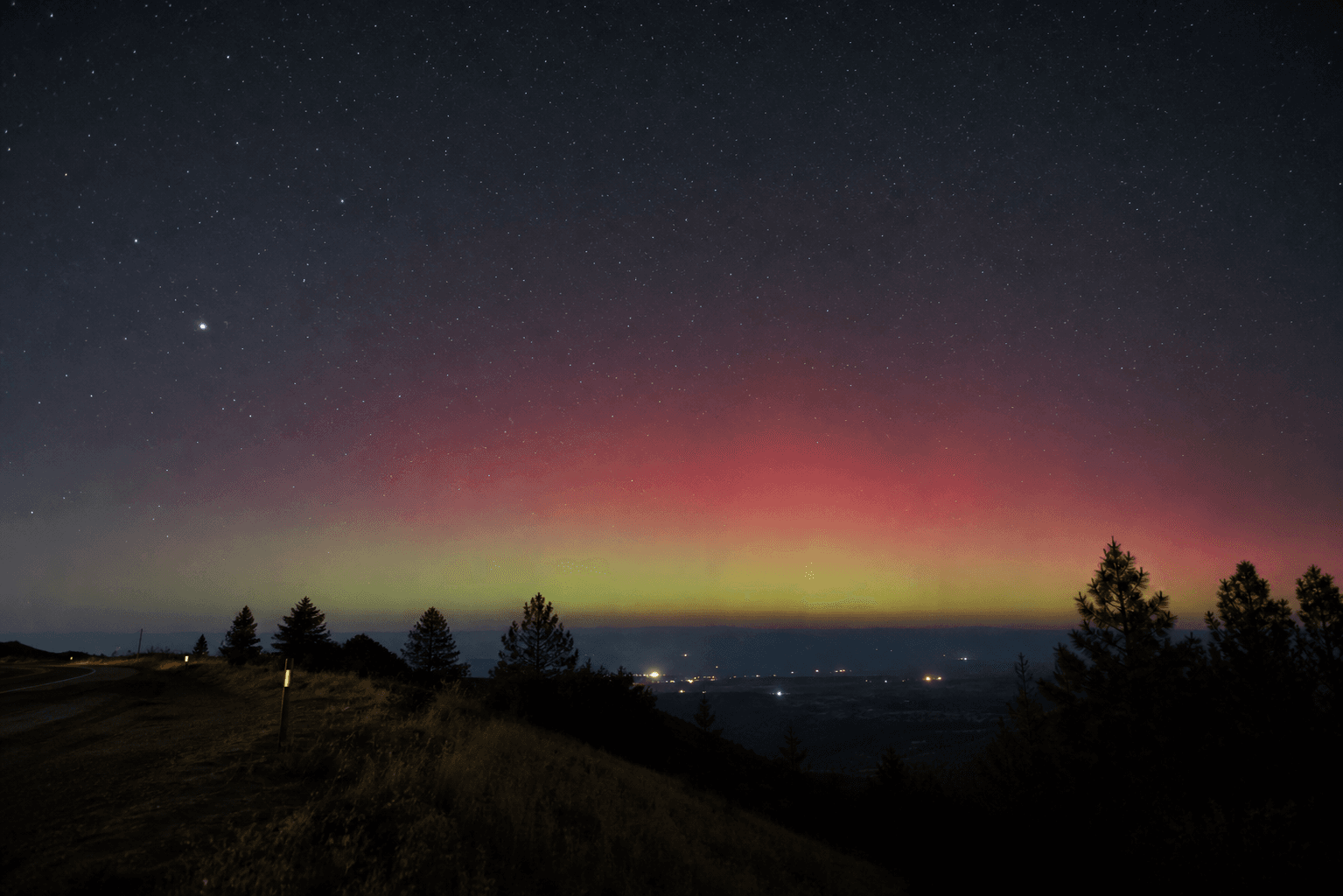
Yes, you can sometimes see the northern lights in California, but this is firmly in the "rare bonus event" category, not the "plan your weekend around it every month" category.
The practical answer is that California usually needs an unusually strong geomagnetic storm for aurora to become visible, and even then the best views are typically in darker locations with a clear northern horizon. Northern parts of the state have better odds than Southern California, and cameras often pick up more color than your eyes do.
The short answer
California can see the aurora during strong to extreme space weather, but it is uncommon.
In most years, the northern lights stay much farther north. NOAA notes that at Kp 6 to 7, aurora may become visible from the northern edge of the United States. California usually needs stronger conditions than that, especially outside the far north of the state.
So if you live in California, the honest expectation is:
- Most nights: no aurora
- On strong storm nights: maybe a low glow near the northern horizon
- On rare historic storm nights: visible aurora reports become possible across parts of the state
That is not a buzzkill. It is just better than pretending Sacramento is secretly Fairbanks.
Why California usually misses out
Auroras are most common under and near the auroral oval, the band around Earth's polar regions where charged solar particles are most likely to light up the atmosphere.
California sits far south of the usual aurora zone. For the lights to reach that far, Earth needs a stronger-than-normal geomagnetic storm. In simple terms, the magnetic disturbance has to be powerful enough to push visible aurora much farther south than usual.
Even then, several local factors still matter:
- Darkness
- Clear skies
- A view toward the northern horizon
- Low light pollution
- How bright the aurora actually becomes
This is why a headline about a major solar storm does not automatically mean all of California gets a glowing green sky overhead. Quite often, the aurora is faint, low, short-lived, or easier to capture with a phone camera than to see clearly with the naked eye.
Where in California your chances are best
If California does get a shot, the better odds are usually in darker northern locations rather than brightly lit urban areas.
The most favorable setup is usually:
- Northern California rather than Southern California
- Dark rural areas rather than major metro areas
- Open northern views rather than mountains, trees, or buildings blocking the horizon
- Late-night hours rather than early evening
That means places with dark skies in far Northern California, the northeast corner of the state, or high and rural inland areas generally make more sense than city neighborhoods with porch lights, traffic, and half the county still awake.
You do not always need to drive to the middle of nowhere, but California aurora nights are not kind to light pollution. If the display is marginal, city glow will happily erase it.
The May 2024 storm is the recent reminder everyone remembers
If this topic feels less hypothetical than it used to, that is because May 10-11, 2024 delivered an unusually strong real-world example.
NASA described that event as the biggest geomagnetic storm in 20 years. During the storm, NASA's Aurorasaurus project recorded a report from a volunteer who said they were able to see the aurora in Oakland, California after following user reports. That does not mean California became regular aurora country overnight. It means the storm was genuinely unusual.
That same event also produced widespread low-latitude aurora across much of North America. It was the kind of storm that makes people in places like California suddenly ask whether they should walk outside and look north, which is not the normal space-weather routine.
If you want the bigger context for that and similar events, the recent major aurora events article covers the broader run of strong storms in 2023 to 2025.
What a California aurora usually looks like
When people picture the northern lights, they often imagine bright green curtains overhead like a tourism poster from Alaska or northern Canada.
California usually does not get that version.
A realistic California aurora sighting is more often:
- Low on the northern horizon
- Fainter than people expect
- More reddish or pale than vivid green
- Easier to notice in photos than in real time
That last point matters. Cameras, especially modern phones with night mode, can reveal color and structure that looked much weaker to your eyes. So yes, the photo can be more dramatic than the moment felt. The camera is not necessarily lying. It is just better at standing still.
What conditions would you want to watch for?
If you are in California and hoping for a rare aurora night, look for a combination of:
- A strong geomagnetic storm alert
- Forecast discussion suggesting unusually low-latitude visibility
- Dark, moonlight-friendly timing
- Clear local skies
- Access to a darker site with a northern view
For practical planning, pair a live forecast with realistic geography. The U.S. northern lights forecast is useful for seeing whether conditions are strong enough to even make California worth thinking about.
If forecast numbers still feel mysterious, what is the KP index explains why that number matters and why it still is not a guarantee.
So, should people in California bother checking?
Yes, but with the right mindset.
If a major geomagnetic storm is underway, it is absolutely reasonable for people in California to pay attention, especially in the northern half of the state. Rare does not mean impossible. It means the threshold is high enough that you should be selective about when you care.
That is the useful habit:
- Ignore ordinary nights
- Pay attention during major storm headlines
- Get away from city lights if conditions actually look promising
- Expect subtlety before spectacle
That approach saves a lot of unnecessary midnight optimism.
The bottom line
You can see the northern lights in California, but only during unusually strong geomagnetic storms, and even then the experience is often faint, low on the horizon, and highly dependent on darkness and local conditions.
So the right answer is not "no," and it is definitely not "all the time now." It is "rare, real, and worth checking when space weather gets serious."