Recent Major Aurora Events That Lit Up North America
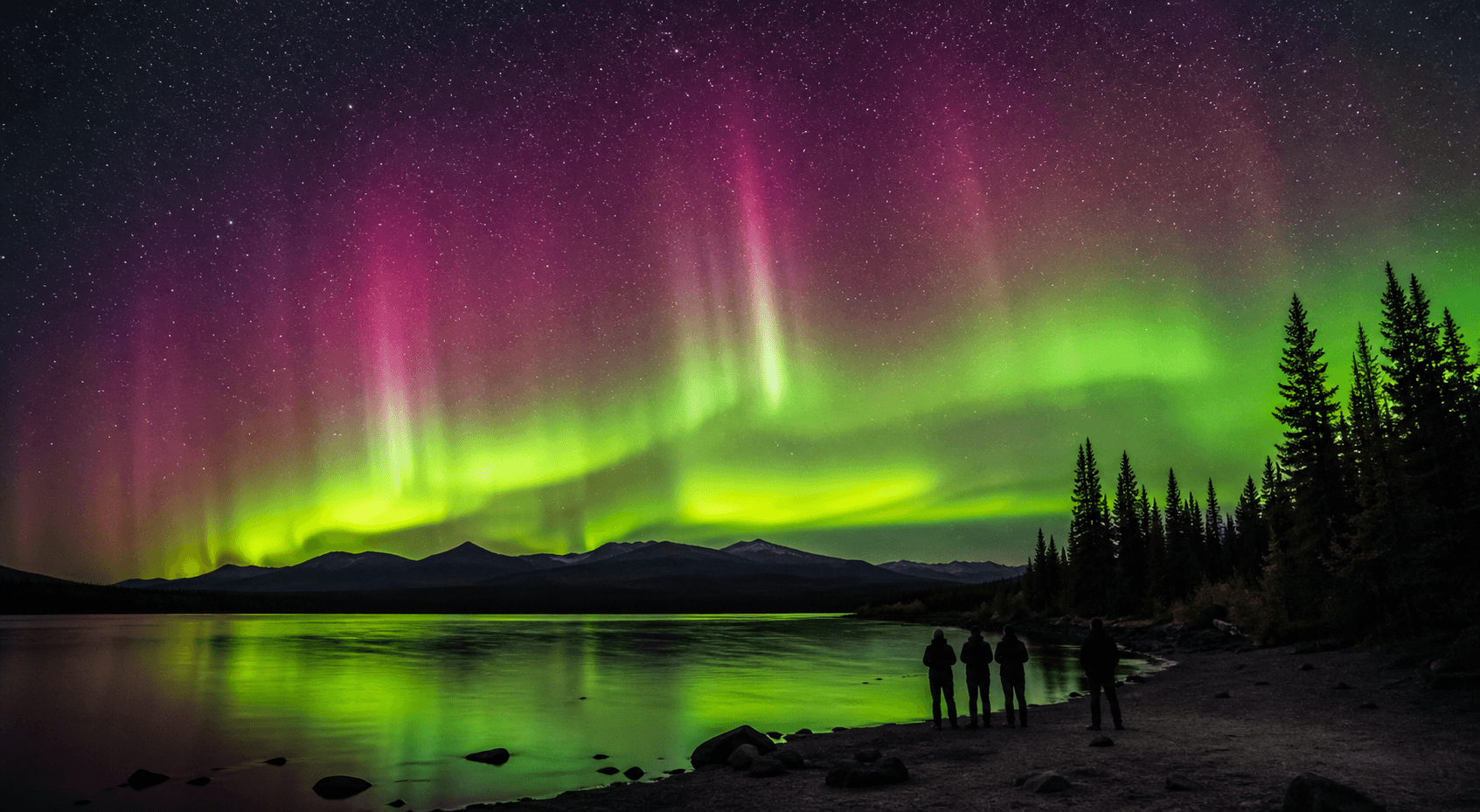
If the northern lights have seemed unusually busy lately, that is not your imagination. The last few years have delivered several strong geomagnetic storms, including one G5 event in May 2024 that was the first "severe" storm to hit Earth in more than 20 years.
The practical takeaway is simple: strong space weather can push auroras much farther south than usual. That is why people in places that do not normally expect aurora, including parts of Texas, Arizona, and California, suddenly found themselves looking up and questioning their life choices in a very pleasant way.
If you want the basics first, start with what the aurora borealis is. If you are checking current conditions, the U.S. forecast and Canada forecast are the useful next stop.
What counts as a "major" aurora event?
When people talk about a big aurora night, they are usually reacting to a strong geomagnetic storm. NOAA rates these storms on a G scale:
- G1 is minor
- G3 is strong
- G4 is severe
- G5 is the top end of the scale
Higher storm levels can expand the auroral oval farther from the poles, which improves the odds for viewers in the northern U.S. and southern Canada, and sometimes much farther south.
November 5-6, 2023: a bright storm over western Canada and into the U.S.
Early November 2023 produced one of the more memorable aurora outbreaks of that season. NOAA reported G3, or strong, geomagnetic storm levels on November 5, 2023. NASA's Earth Observatory noted that the aurora over western Canada was so bright near Edmonton that it nearly saturated the VIIRS satellite sensor.
Where it was seen:
- Western Canada, especially near Edmonton
- Alaska
- Near the U.S.-Canada border
- Glasgow, Montana on the following night
- Faintly as far south as Texas
What made it interesting:
- NASA linked the event to multiple coronal mass ejections rather than a single burst
- The satellite view was bright enough to stand out dramatically over western Canada
- It was a good reminder that a G3 storm can already be enough to bring aurora into parts of the northern and even central U.S.
This was one of those events that felt like a preview of what Solar Cycle 25 still had in store.
May 10-11, 2024: the Gannon storm went fully off script
This is the big one. On May 10, 2024, Earth was hit by the first G5, or severe, geomagnetic storm in over two decades. NASA says it was the biggest geomagnetic storm in 20 years and has called it the best-documented geomagnetic storm in history.
Where it was seen:
- Across much of Canada
- Across large parts of the northern U.S.
- Far beyond the usual aurora zone, including Oakland, California
- At unusually low latitudes worldwide
What made it interesting:
- NOAA issued its first severe geomagnetic storm watch in almost two decades ahead of the event
- The storm was created by several powerful coronal mass ejections that merged into a superstorm before reaching Earth
- Some trans-Atlantic flights took more southerly routes to reduce radiation and communication risks near the pole
- NASA's MAVEN mission later saw auroras engulf Mars as the same active region rotated and sent storm effects deeper into the solar system
For casual aurora watchers, this was the event that turned "maybe the northern states" into "wait, people in California saw it too?" It was unusual, historic, and not the kind of night you should assume will repeat on demand.
October 10-11, 2024: a second major fall display deep into the midlatitudes
Just a few months after the May 2024 superstorm, another powerful event arrived. NASA's Earth Observatory reported that the October 10-11, 2024 display was visible beyond the Arctic Circle and deep into the midlatitudes. NOAA rated the storm G4, which is one step below the top of the scale.
Where it was seen:
- Across Canada and typical high-latitude aurora regions
- Deep into the U.S. midlatitudes
- Reported in Nevada, North Carolina, Arizona, and Texas
What made it interesting:
- Millions of skywatchers saw green, pink, and red aurora on the same night
- The event happened as Solar Cycle 25 was reaching its maximum phase
- It showed that May 2024 was not a one-off fluke, even if the October storm was not quite as extreme
This is a useful event to remember because it shows how active solar maximum can feel in practice. You do not need a once-in-a-generation G5 storm for a lot of people to get a shot at the northern lights.
November 11-12, 2025: the strongest geomagnetic storm of 2025
The strongest geomagnetic storm of 2025 arrived in November. NOAA reported G4 storm levels on November 12, 2025, and noted aurora shining over northeastern Colorado. NASA also described widespread U.S. sightings and said the storm helped produce aurora as far south as Florida.
Where it was seen:
- Northeastern Colorado
- Arizona
- New Mexico
- Texas
- Florida
- Broad areas of Canada and the northern U.S.
What made it interesting:
- NASA said several solar eruptions in early November built into the most intense geomagnetic storm of 2025
- The storm was associated with an X5.1 solar flare on November 11
- Elevated space weather was significant enough that NASA postponed an ESCAPADE launch attempt because of the storm environment
This one is a good example of a major aurora event also being a real space-weather operations story. Beautiful sky for observers, more complicated day for people managing spacecraft and missions.
What these recent storms have in common
A few patterns show up across all four events:
- They happened during the active rise and peak phase of Solar Cycle 25
- Strong or multiple coronal mass ejections were the main trigger
- Auroras spread farthest south when storms reached G4 or G5 levels
- The most eye-catching photos often came from places that do not usually get regular aurora
That last point matters. Viral aurora photos from Arizona, Texas, or California are real, but they usually show rare storm nights, not normal odds.
What readers in the U.S. and Canada should take from this
Recent years have been unusually good for aurora watchers because the Sun has been unusually busy. That improves the chance of rare southern sightings, but it does not change the usual rules:
- Northern Canada and Alaska still have the best regular odds
- Northern U.S. states benefit most when a storm gets strong enough to push the auroral oval south
- Clear skies, darkness, and low light pollution still matter even on a strong storm night
In other words, a dramatic geomagnetic storm can open the door, but your local weather still gets the final vote.
The takeaway
From the bright November 2023 storm over western Canada to the historic G5 event in May 2024, the deep-midlatitude display in October 2024, and the strong November 2025 storm, the last few years have been unusually eventful for aurora watchers.
That does not mean every forecast will turn into a headline night. It does mean that during an active solar cycle, it is worth paying attention. The Sun occasionally decides to put on a show, and sometimes it forgets to keep the invitation list north of the border.