What Is the KP Index? How Aurora Watchers Should Actually Use It
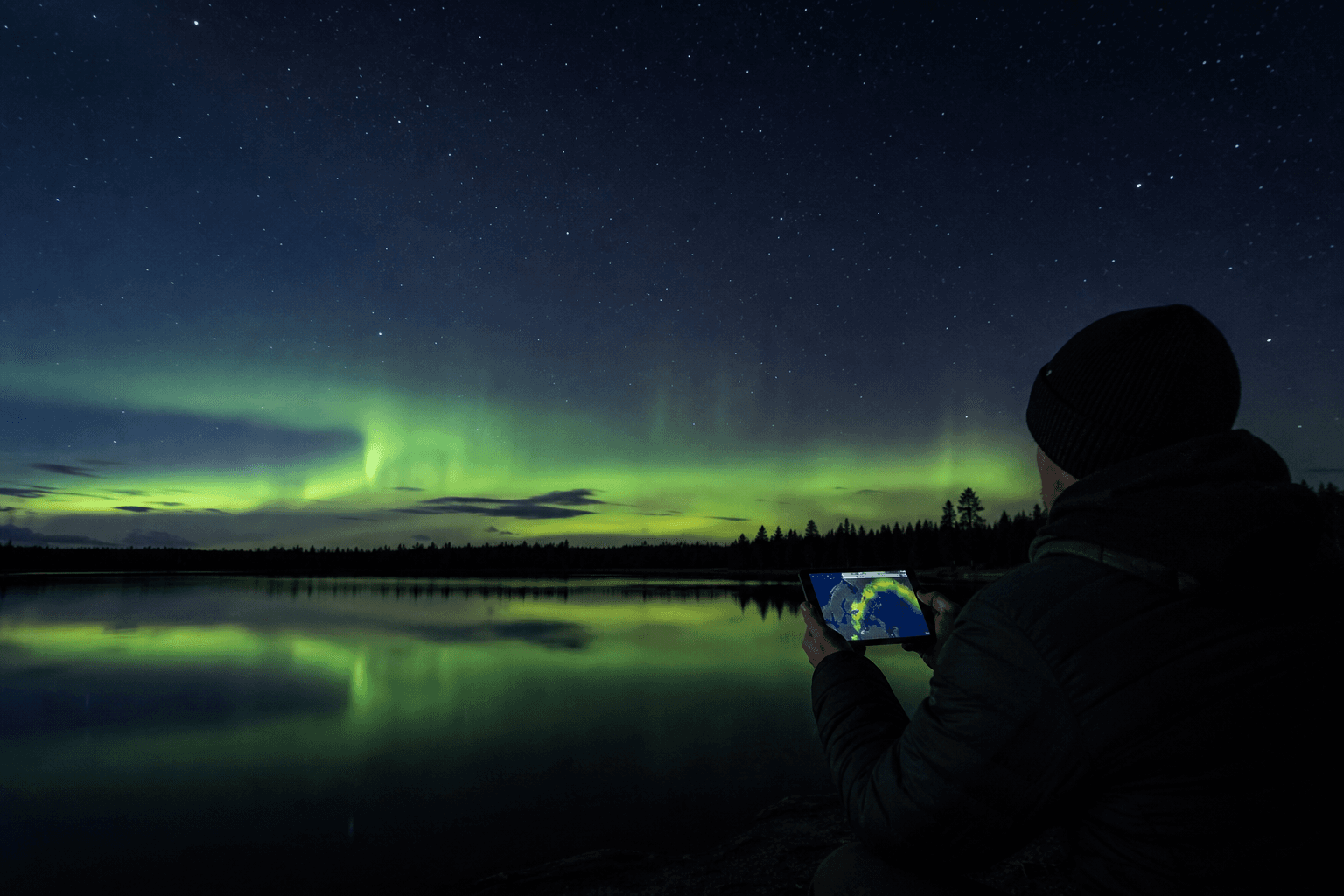
The KP index is one of the most common numbers in aurora forecasts, and it also manages to confuse plenty of people on first contact.
The short version is simple: KP is a rough measure of global geomagnetic activity. Higher KP values usually mean the aurora has a better chance of reaching farther south. That makes it useful, especially for casual watchers in the U.S. and Canada, but it is not a magic "yes or no" button for tonight's sky.
The short answer
If you only want the practical takeaway, here it is:
- A higher
KPindex usually means better odds of seeing aurora farther south - A lower
KPindex usually means the best viewing stays closer to the usual auroral zone KPis a broad global signal, not a street-level forecast for your exact location- You still need darkness, clear skies, and enough local visibility to actually see anything
In other words, KP is worth checking. It just should not be the only thing you check unless you enjoy being confidently wrong outdoors.
What the KP index actually measures
The KP index is a scale from 0 to 9 that describes how disturbed Earth's magnetic field is over a three-hour period.
When solar wind and other space-weather effects shake up the magnetosphere, observatories around the world record those magnetic changes. The KP index turns that information into a simplified number.
In plain English:
KP 0to2usually means relatively quiet geomagnetic conditionsKP 3to4means activity is becoming more noticeableKP 5or higher usually means storm-level geomagnetic activity
That is why aurora forecasts often mention KP. It gives people a quick shorthand for whether conditions are calm, active, or unusually strong.
Why aurora watchers care about KP
For casual aurora watchers, the most useful thing about KP is not the exact physics. It is what the number suggests about how far south the aurora may be visible.
As geomagnetic activity increases, the auroral oval can expand away from the poles. When that happens, places farther south can have a better chance of seeing the northern lights.
That matters a lot in the U.S. and Canada:
- In Alaska and northern Canada, auroras can be common even at modest
KPlevels - In southern Canada and the northern U.S., stronger
KPvalues are often more important - In much farther south parts of the U.S., you usually need an unusually strong geomagnetic storm
So if you live in Fairbanks, a moderate number may still be plenty interesting. If you live in Michigan, Montana, or Maine, the same number may be more of a "maybe." If you live in Texas, KP usually needs to arrive with ambition.
What KP does not tell you
This is the part people miss.
KP is useful, but it leaves out several details that matter for real-world viewing:
- Whether your local sky is cloudy
- Whether it is actually dark where you are
- Whether moonlight will wash out a faint display
- Whether the aurora will be bright overhead or just low on the northern horizon
- Whether activity will peak during your nighttime hours
It also smooths conditions over a three-hour window, which means it is not great at capturing short bursts of dramatic brightening. Auroras can intensify quickly during substorms, and a broad KP number may not fully show that timing.
If you want the fuller picture, why aurora is hard to predict explains why even strong-looking forecasts can still turn into mixed results.
How casual aurora watchers should use KP
The best way to use KP is as a filter, not as a final verdict.
Good approach:
- Check the
KPforecast to see whether geomagnetic activity looks quiet, moderate, or strong. - Compare that number to your latitude. A
KPvalue that is exciting in Alberta may be less exciting in Colorado. - Check local cloud cover and darkness.
- Look at short-term forecast updates instead of relying on one number from earlier in the day.
For most people, KP helps answer this question: "Is this even worth paying attention to tonight?"
That is a good question. It is just not the only question.
A simple way to think about different KP levels
There is no perfect one-size-fits-all map, but this mental model is useful:
KP 0to2: mostly better for high-latitude areasKP 3to4: can be more interesting for northern-tier U.S. states and southern CanadaKP 5and above: stronger storm-level activity that may push visibility farther southKP 7to9: unusually strong events that can produce rare low-latitude sightings
Those are broad patterns, not guaranteed borders. The aurora does not check county lines before showing up.
Why one KP number can feel different in different places
Location changes everything.
The same KP forecast can lead to very different outcomes depending on where you are:
- In Yellowknife, a moderate
KPnight may still produce a solid display - In Minnesota, that same night might mean a faint glow low to the north
- In a more southern U.S. location, it might mean no visible aurora at all
This is why location-specific tools are more useful than staring at a single global number. The U.S. forecast and Canada forecast are a better next step when you want to move from general signal to practical viewing odds.
KP is helpful, but not the whole forecast
If you are new to aurora watching, KP is worth learning because it gives you a quick read on geomagnetic activity. But it works best when paired with a few other basics:
- Local weather
- Darkness and twilight
- Light pollution
- Your latitude
- Short-term space-weather updates
If you want the science foundation underneath all of this, what is the aurora borealis is the place to start.
The takeaway
The KP index is a rough global measure of geomagnetic activity. Higher values usually improve the odds that auroras can be seen farther south, which is why KP shows up in so many northern lights forecasts.
For casual watchers, the smart way to use it is as an early signal, not a guarantee. Check KP, then check your location, clouds, darkness, and short-term forecast updates. That combination will tell you much more than any single number can.