What Is a Substorm?
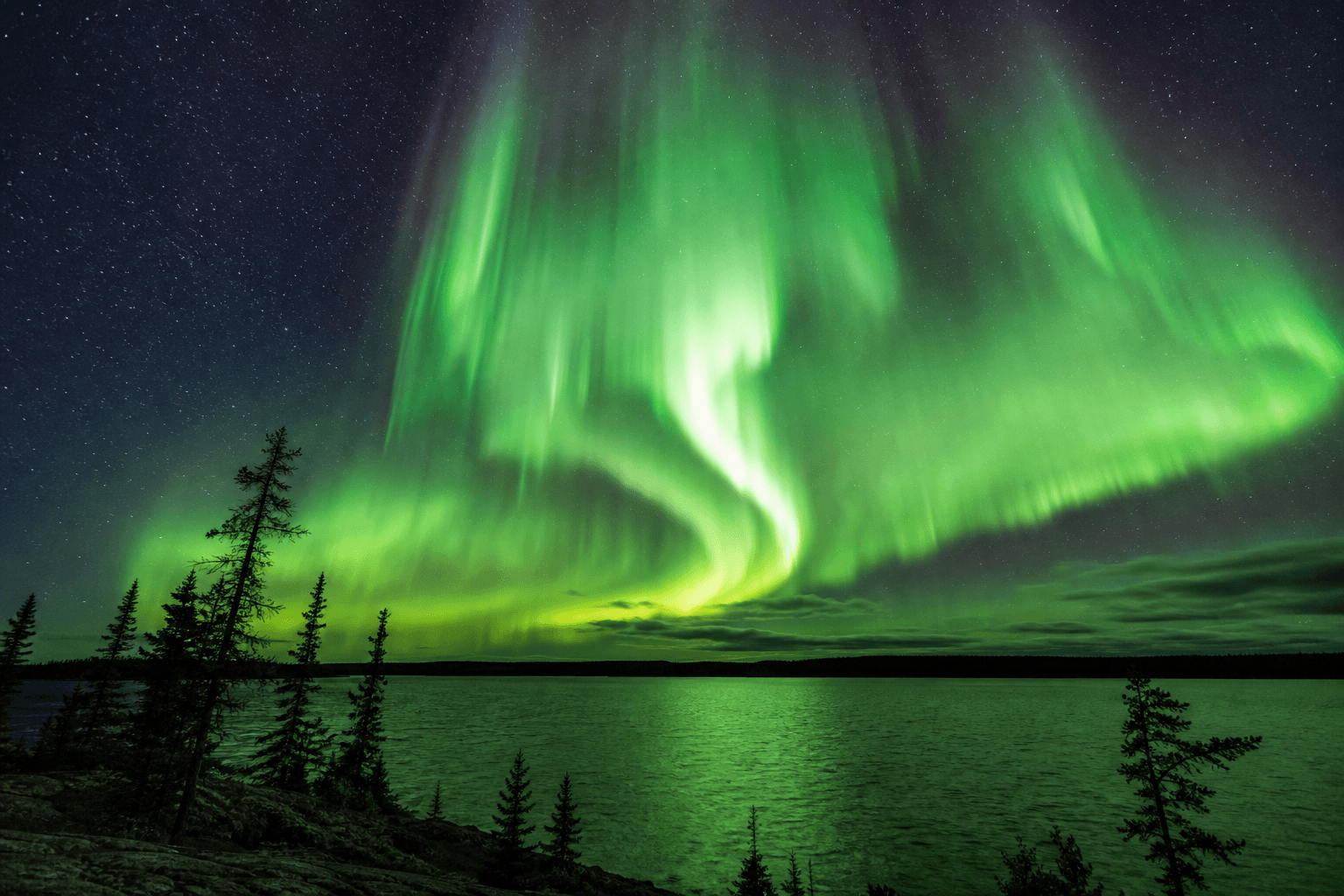
A substorm is one of the main reasons the northern lights can go from faint and quiet to suddenly bright, active, and worth texting your friends about.
The short version is this: a substorm is a brief surge of energy in Earth's magnetosphere that often makes the aurora intensify. If you are outside watching the sky, it can mean the lights get brighter, spread farther, and move more dramatically for a while.
The short answer
For casual aurora watchers, a substorm usually means better aurora visibility in the moment.
It can cause the aurora to:
- Brighten quickly
- Expand across more of the sky
- Develop faster motion, arcs, and curtains
- Become easier to notice with the naked eye
That said, a substorm is not a magic switch. You still need darkness, clear skies, and a location where the aurora is actually within reach.
What a substorm actually is
Earth is surrounded by a magnetic bubble called the magnetosphere. When charged particles from the Sun flow past Earth, some of that energy gets stored in the magnetosphere, especially on the night side of the planet.
A substorm happens when part of that stored energy is suddenly released. That release sends energy and particles into the upper atmosphere near the polar regions, which can make the aurora borealis brighten and become more active.
If that sounds a little abstract, think of it this way: the solar wind can load energy into Earth's magnetic system for a while, and a substorm is one way that system lets some of it go all at once.
Why aurora watchers care about substorms
Substorms matter because they often produce the aurora moments people actually remember.
A weak glow near the horizon can turn into a brighter arc overhead. A quiet green band can start rippling, pulsing, or breaking into moving curtains. If you have ever heard someone say the aurora "suddenly woke up," a substorm was often part of the story.
In practical terms, a substorm can:
- Make a faint aurora easier to see
- Improve color and contrast in a dark sky
- Increase motion and structure, which makes the display look more dramatic
- Help cameras capture a much more obvious scene
This is one reason aurora watching involves patience. Conditions can look average for a while, and then the sky decides to become interesting.
Does a substorm mean the aurora will be visible farther south?
Sometimes, but not always.
This is where people often mix up two different ideas:
- How intense the aurora looks locally
- How far south the aurora oval reaches
A substorm often makes the aurora stronger and more active for people already near the active zone. But whether it becomes visible much farther south depends on the larger geomagnetic setup, not just the substorm itself.
In other words, a substorm can make a display in Alaska or northern Canada much better, while someone much farther south still sees nothing because the aurora never reached their sky.
How long does a substorm last?
Substorms are usually short compared with the full span of an aurora night.
The most active part often lasts on the order of tens of minutes, though the full build-up and recovery can take longer. That is why aurora conditions can change noticeably over a single evening. A forecast may look decent for hours, but the most eye-catching part of the show can come in a shorter burst.
This is also why people sometimes step outside, see very little, go back in, and miss the best part. The aurora can be rude like that.
Why substorms are hard to predict exactly
Scientists can forecast broader space weather conditions better than they can predict the exact minute a local substorm will kick off.
That is because substorms depend on how energy builds up and is released inside the magnetosphere, which is a complicated system with a lot happening at once. Forecasters can often tell when the overall environment is favorable for aurora activity, but the exact timing and local intensity are harder to pin down.
A strong setup improves your chances, but it does not provide a minute-by-minute script.
What a substorm means for visibility
If you are trying to decide whether to go outside, a substorm is good news, but only within the usual real-world limits.
Your chances improve most when you also have:
- A dark sky
- Clear weather
- Low light pollution
- A northern location, or a strong enough geomagnetic event for your latitude
- Patience to watch for a while instead of checking for two minutes and giving up
For readers in the U.S. and Canada, the biggest practical takeaway is simple: a substorm can make the difference between "barely noticeable" and "actually impressive," especially in places that already have decent aurora odds.
If you are checking conditions regularly, it helps to combine a forecast with your local sky. The U.S. forecast and Canada forecast pages are a better starting point than a single global number on its own.
The takeaway
A substorm is a short-lived release of energy in Earth's magnetosphere that often makes the northern lights brighter, more active, and easier to see for a while.
It is one of the reasons auroras can change so quickly over a single night. For aurora watchers, that means patience matters. A quiet sky at 10:30 PM is not always a quiet sky at 11:00 PM.